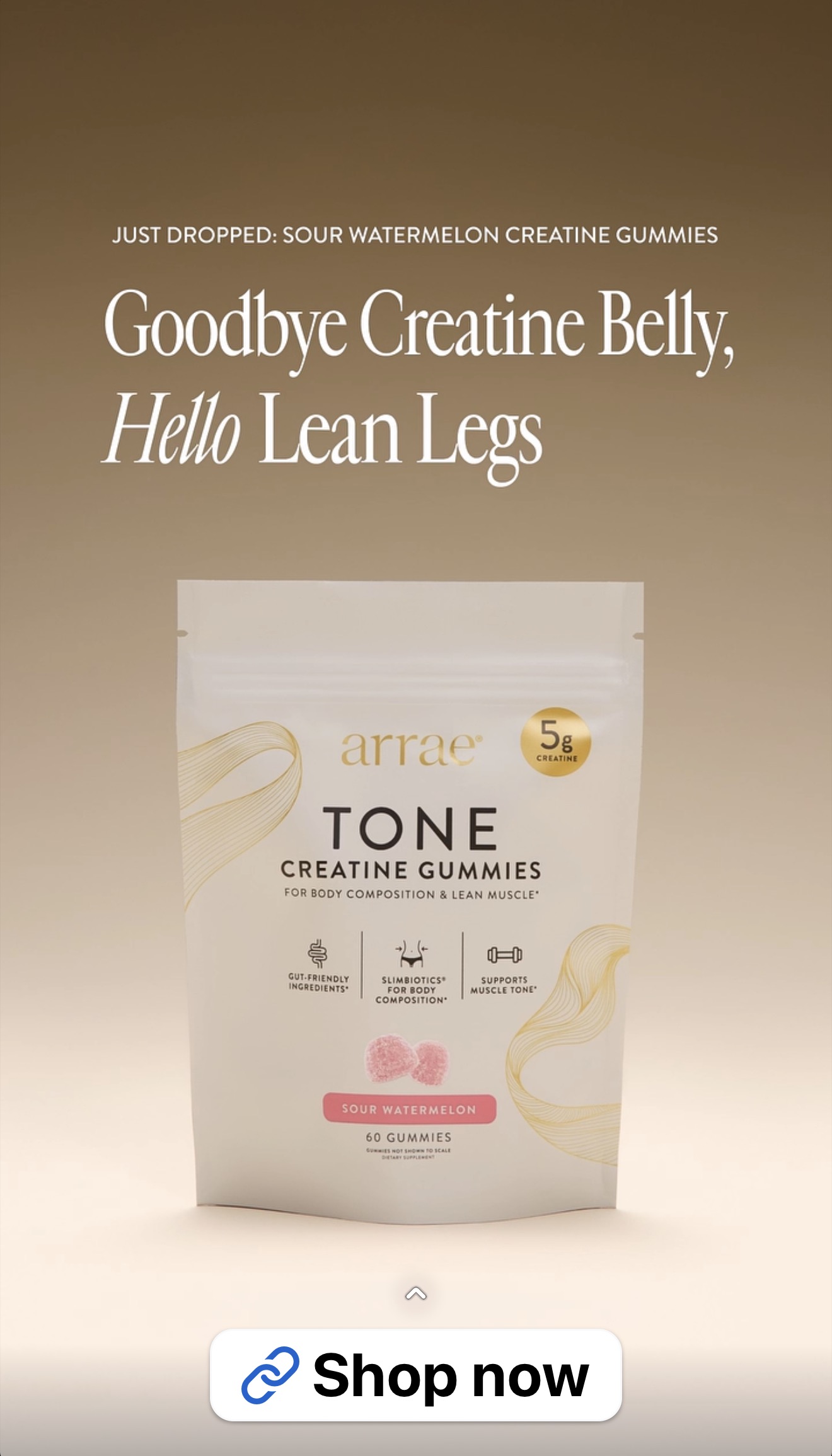
Arrae Tone Gummies: A New Marketing Grift
For years, diet culture looked obvious.
It sold meal replacements, calorie-counting apps, detox teas, and promises of rapid weight loss. The messaging was blunt: if you shrink yourself, you’ll be more worthy and desirable.
Today, the language has changed. Nobody talks about dieting anymore – at least, they don’t use that word. The diet and wellness industries have gotten wise to the fact that women have become increasingly skeptical of traditional diet culture, but we still retain many of the insecurities that fueled it.
So, these industries have pivoted: rather than selling weight loss, companies now sell the appearance of wellness. Instead, we’re told to optimize, balance, support, enhance. Reduce bloat. Get lean. Tone our bodies. Improve recovery.
It’s a bait and switch with the same underlying messaging: smaller is better. And when it comes to this type of marketing, few companies reach the level that Arrae does. I mean, in a bad way.
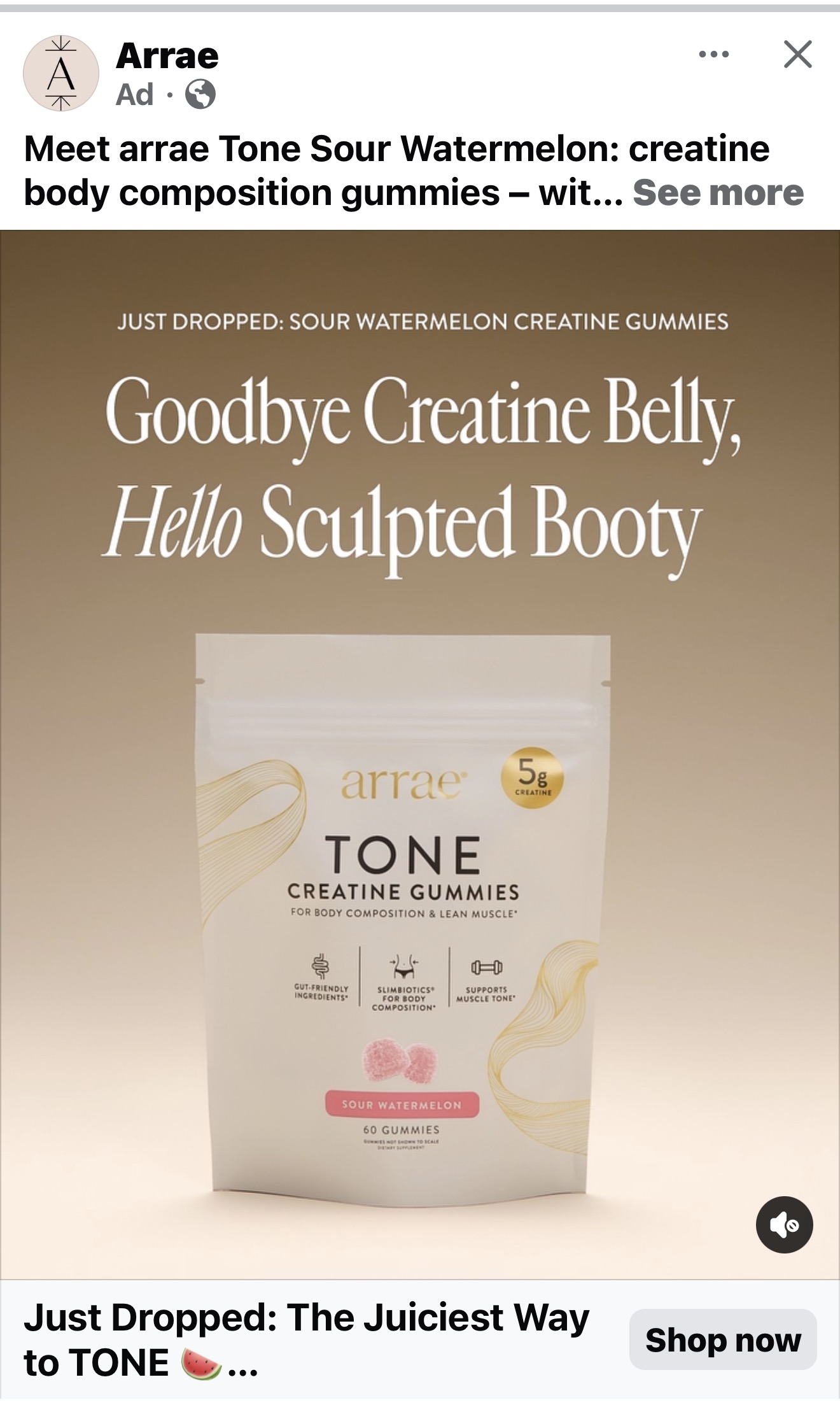
From Bloating to “Tone”: Building a Brand Around Women’s Anxieties
Founded in 2020 by Siff Haider and Nish Samantray, Arrae quickly became one of social media’s most recognizable wellness brands.
The company built its reputation through influencer marketing, celebrity endorsements, and aspirational branding. It all looks perfectly aesthetic, and the products target common concerns among women.
Notice I didn’t say “health concerns.” I said “concerns.” There’s a difference: a health concern is something like iron-deficiency anemia, osteoporosis, hypertension, or diabetes. A concern is feeling bloated after dinner, wanting flatter abs, feeling like your arms aren’t defined enough, and worrying that your body doesn’t look the way you think it should.
Medical conditions require evidence, but concerns simply require marketing. Arrae’s genius lies in recognizing that amplifying common concerns can be extremely profitable. Each product begins with a feeling many women already have, and positions supplementation as the solution.
The message isn’t subtle: you’re bloated, too stressed, or not toned enough. Buy this to fix yourself. All the cool kids are doing it.
The Billion-Dollar Business of Convincing Women That Their Bodies Are Problems
Arrae’s Product Lineup
The company’s product lineup reveals the strategy immediately.
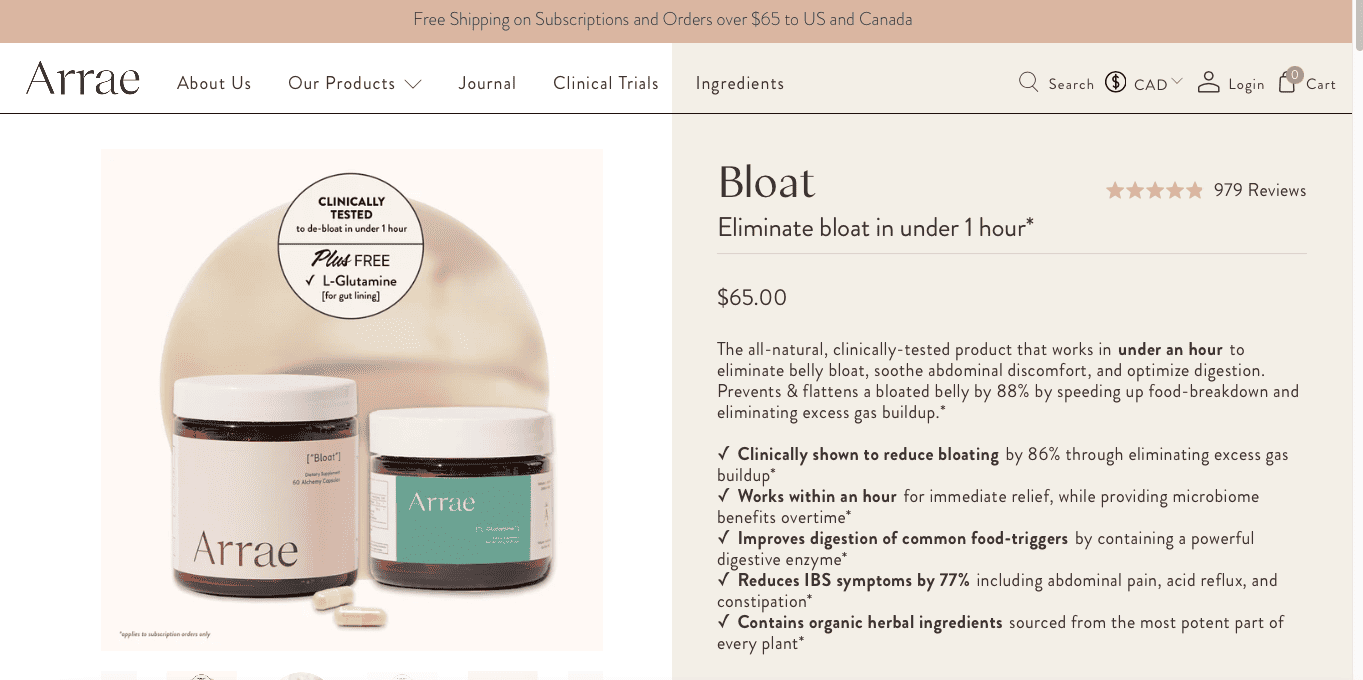
Bloat.
Tone.
Calm.
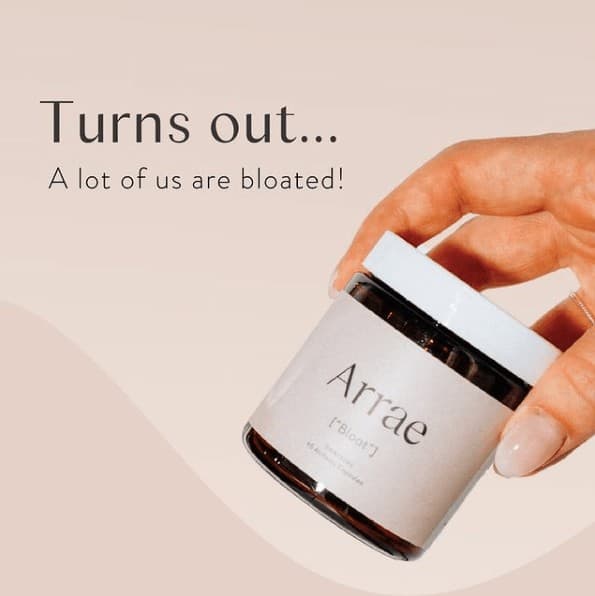
Before we talk about Tone, we need to talk about Bloat. Bloat was Arrae’s first breakout hit product, and has seemingly served as the blueprint for the company’s marketing. This isn’t because the product is revolutionary; it’s because it has been marketed to solve a problem – bloating – that is most often not actually a problem.
In other words, Arrae has convinced us that a rounded belly is not normal or healthy, and that flies in the fact of basic physiology.
Humans get bloated from water retention, hormonal fluctuations, and because our stomach is full. Digestion creates gas. In most people these things don’t present a physical problem, but wellness culture has made us fear bloating, telling us that it’s some sort of evidence that something is wrong with our body. That fear sells products like Bloat.
A $70 container of Arrae bloat has a combination of plant-based ingredients that may help as diuretics and digestive aids, but for what? If you have problematic bloating, please see a doctor.
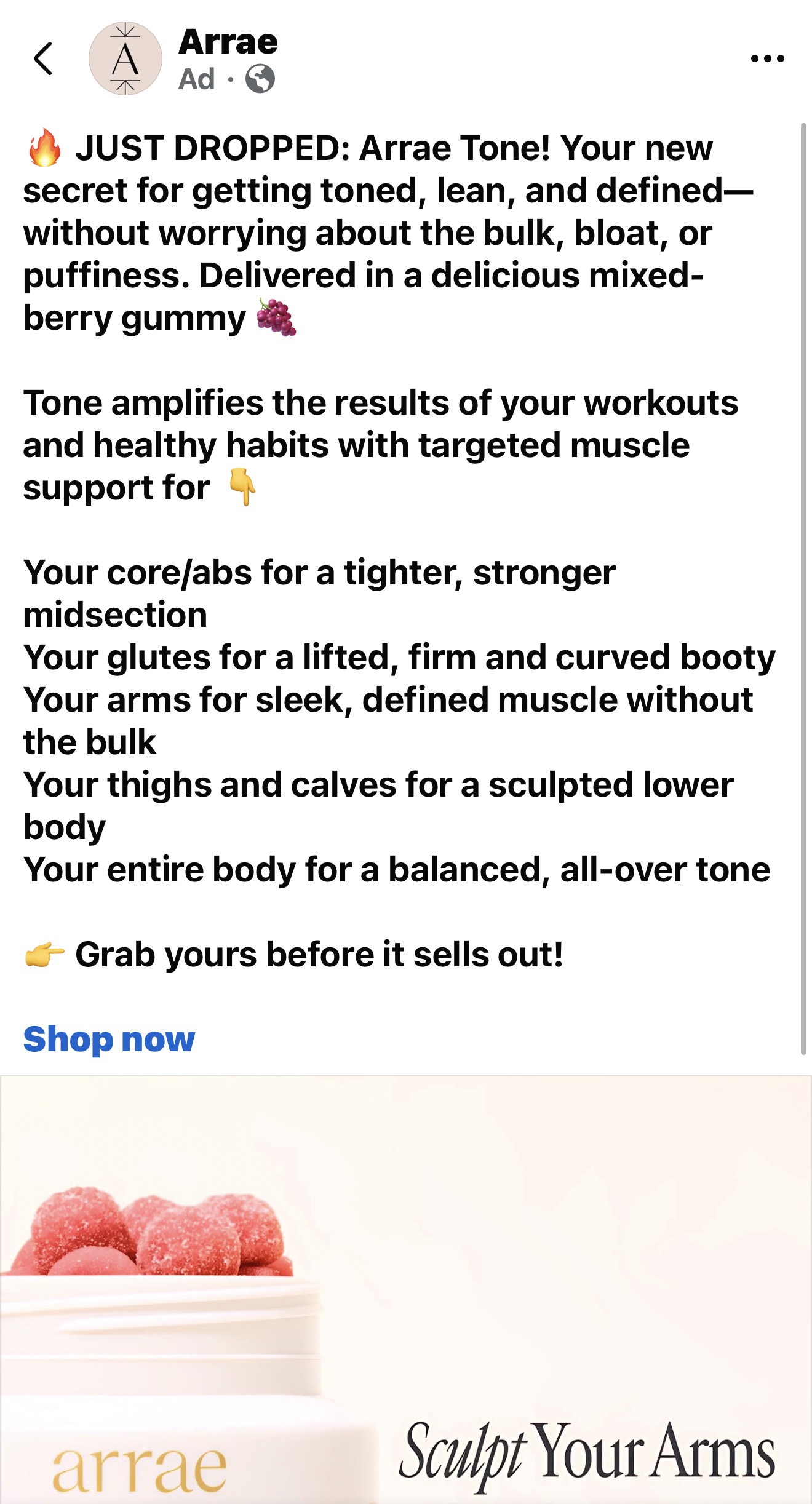
Enter Tone: Creatine for Women Who Are Afraid of Creatine
If Bloat capitalized on digestive insecurity, Arrae’s Tone marketing capitalizes on the longstanding fear of weight training giving women a bigger body. Even if that extra size is muscle. How many times have I heard women say they’re afraid of weight training because it will make them “bulky””?
Lifting weights doesn’t make women bulky at all, and even if it did, is it bad to have muscles? Arrae seems to want us to believe it is. They say that women should be “balanced,” “sculpted,” but not muscular. Are we throwing it back to the 50s, because this verbiage is reminiscent of body standards at that time: women shouldn’t take up space, we should remain “feminine,” and while it’s okay to be strong, we shouldn’t be strong LIKE A MAN.
None of this is even mildly acceptable for any era, but especially for now, when we should know better.
I wrote an entire Substack about creatine, breaking down the claims and research around it. You can read that here.
Research on creatine consistently demonstrates it benefits for:
- Strength
- Power output
- Muscle mass
- Exercise performance
The irony with Arrae’s approach here is that creatine doesn’t need marketing gimmicks; the evidence speaks for itself. Yet rather than focusing on what creatine can do, Arrae’s ads focus on what women are afraid it will do: Make us bulky, puffy, masculine, and heavier. It’s a fascinating strategy, because instead of overcoming misinformation, they’re using it to sell a product.
“Toning” Is Not a Scientific Claim
One of the most common themes throughout Arrae’s marketing is reassurance. Women are promised they can achieve:
- Lean muscle
- Sculpted arms
- Defined legs
- Lifted glutes
- Tight abs
Without:
- Bulk
- Puffiness
- Bloating
The problem is that these distinctions largely exist in marketing language rather than physiology.
There is no mechanism through which a gummy selectively sculpts your arms while flattening your stomach, and marketers know this. The intentional use of the word “tone” seems less intimidating and more geared towards women than “build muscle.” Very on-brand for Arrae, since their entire brand seems to be built on the messaging that smaller is better, and that maintaining what is considered to be a smaller, feminine form should always be the goal.
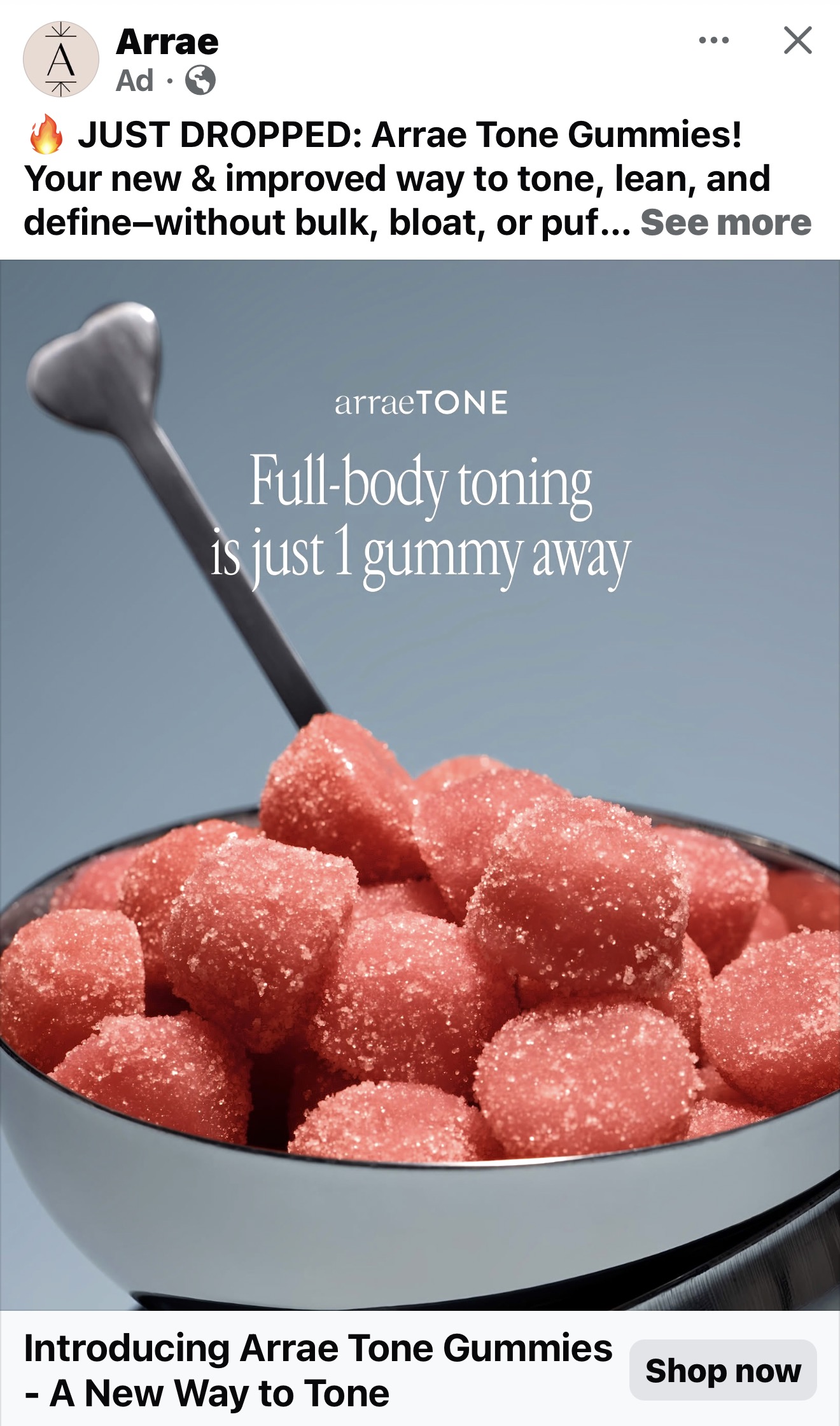
The ads for Arrae Tone imply that all it takes is one Tone Gummy and poof! Instant fitness. Except, that’s not how creatine works at all. It doesn’t work to build muscle on its own; it merely gives the user energy to work out harder. It’s an indirect effect, but that’s definitely not reflected in the advertising for Tone.
Also: creatine isn’t candy.
The Gym Bro Ick
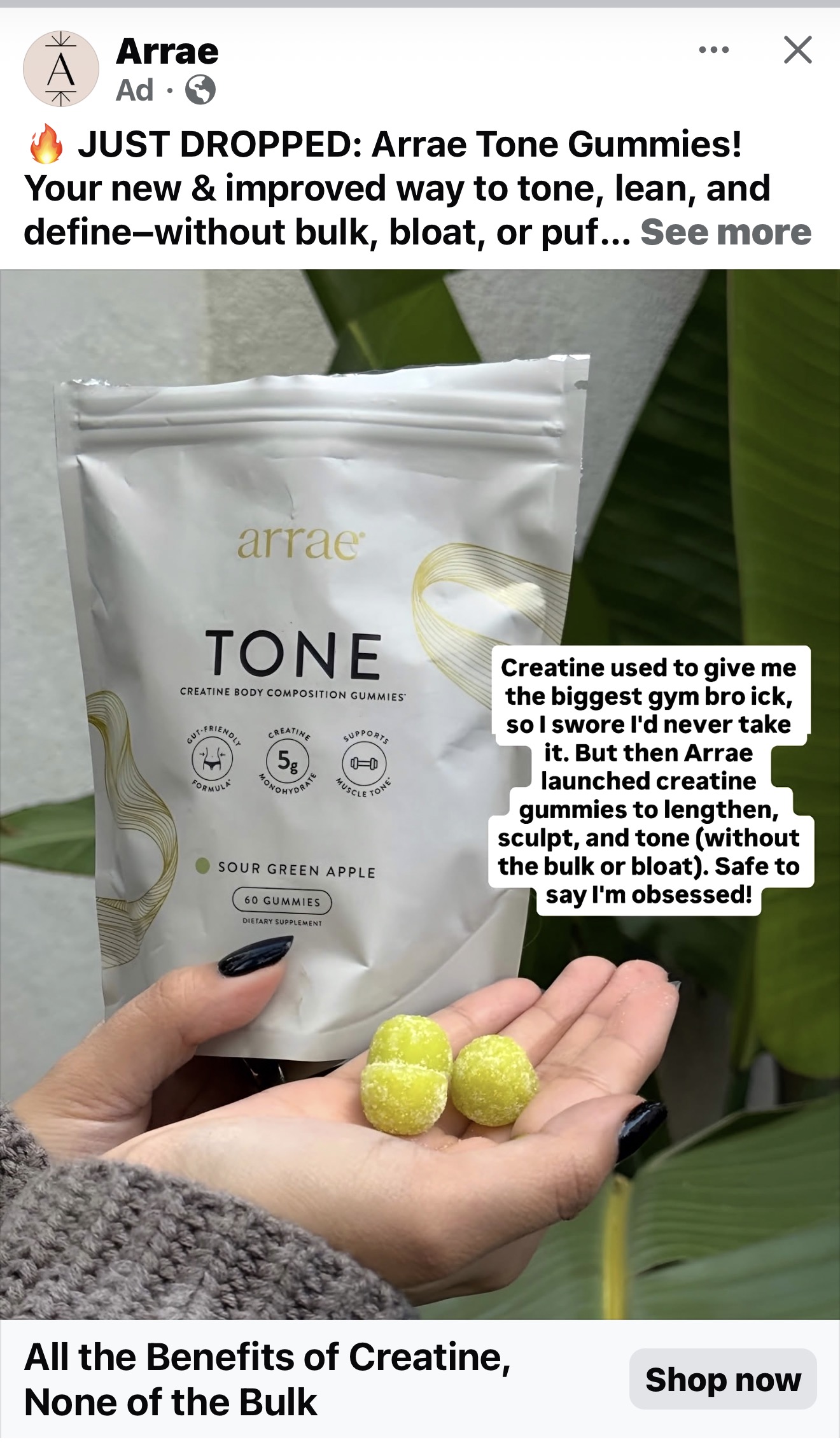
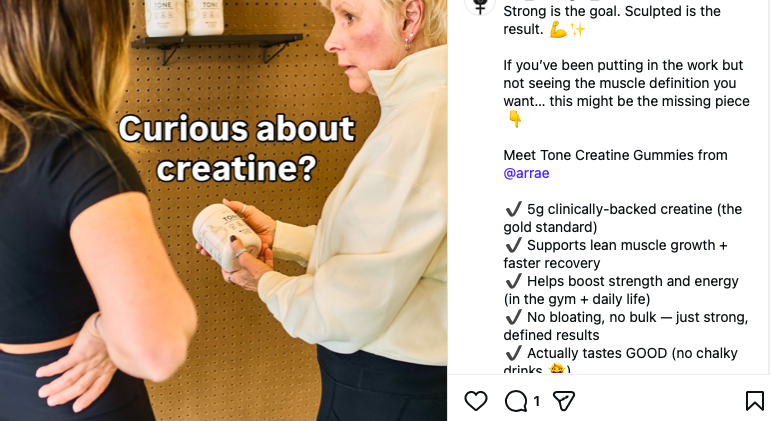
One Arrae advertisement begins with a woman saying:
“Creatine used to give me the biggest gym bro ick.” That single sentence may reveal more about the company’s marketing strategy than any ingredient list ever could. Think about what it’s communicating: not evidence, physiology, or health benefits. It’s selling identity and distance from the type of person who has typically used creatine in the past: bodybuilders and gym bros.
Even though creatine is now very popular among women, the message is clear: this isn’t “that” kind of creatine, it’s creatine for women (except that creatine is creatine, it’s not gender-specific). It’s for women who want muscle, but not enough to look “big.” Fitness, but still thinness.
Is anyone feeling like the list of “ideal” characteristics for womens’ bodies keeps getting longer, more exclusive, and less attainable? Yeah, me too.
Why This Matters
Some people will read this and think, who cares? They’re just gummies.
But marketing matters, because marketing shapes beliefs, and beliefs shape behaviours…like laying out money for supplements we don’t necessarily need, because of claims we shouldn’t believe.
When we repeatedly hear messages suggesting that being in a larger body is unacceptable – whether it’s bloating or bulk or anything else, we become more likely to fear being that way. And when we repeatedly hear that every bodily experience requires optimization, we become less likely to trust our bodies.
This seems to be Arrae’s actual business model.
The Real Product
I don’t actually have a problem with creatine (although I do have a problem with “anti-bloat” supplements). What I object to is the idea that women need to be manipulated into taking evidence-based supplements through fear-based messaging about their appearance.
Women don’t need to be told they’ll get sculpted arms or a flatter stomach. And we certainly don’t need wellness companies framing normal digestion as a problem requiring correction.
We deserve honesty, evidence, and marketing that respects our intelligence rather than creating – and then exploiting – insecurities under the guise of “wellness.” Because there’s nothing “well” or healthy about this.