
How to Find Reliable Nutrition Information on Social Media.
If you’ve spend any time online lately, you’ve probably seen social media content promoting hydrogen water, fat burning foods, hormone balancing salads, Oatzempic, and a lot of other things that sound..well…strange.
They were probably described in sciencey-sounding verbiage, with lots of anecdotes like, ‘X caused me to lose 30 pounds in 2 weeks!’ or, ‘Y is going to prevent Alzheimers!’
Unsurprisingly and unfortunately, a recent survey on 2000 millennial and Gen Z across the U.S., Canada, UK, and Australia, done by My Fitness Pal and Dublin City University, revealed that most of the nutrition content on social media is inaccurate.
Honestly, I think we as consumers are just becoming used to ‘miraculous’ cures and hyperbolic claims being thrown in our faces on a regular basis. Half the time, I feel like we don’t even react to them anymore. But when we do, it can be detrimental to our health. Reliable nutrition information on social media is really hard to find at this point.
As a dietitian, I’ve been trained to understand how the body works, how to read and interpret research, and how to break down complex nutrition processes so laypeople can understand them.
I’m also held to standards of ethics and professionalism by my regulating body. Yes, I can use the occasional spicy language in posts. No, I can’t sell fat burners and tell people that they work for weight loss.
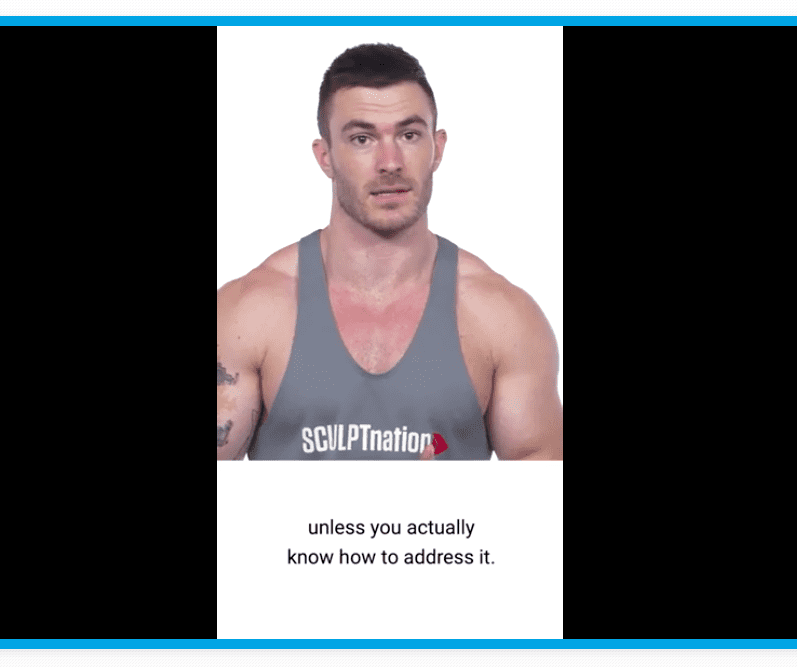
Unfortunately, the vast majority of content creators aren’t held to the same standards, and as a result, a lot of the nutrition content we see online is garbage. A lot of creators are going beyond the available evidence in order to sell a narrative and usually, a product.
Interestingly, much of this content is promoted under the guise of ‘wellness’ or ‘health.’
Wellness doesn’t look like handfuls of supplements or misinformation or micromanagement or viral trends. None of that makes any of us any healthier.
True wellness is allowing your body do what it does naturally, and not feeling the need to intervene unless it’s medically necessary.
True wellness is being able to eat and live your life without anxiety around food.
True wellness is focusing on your life as a whole, not micromanaging or ‘hacking’ every bodily function or meal.
The nutrition qualifications that many of these creators have are made up, or given by unaccredited online programs that don’t truly prepare anyone to provide health information.
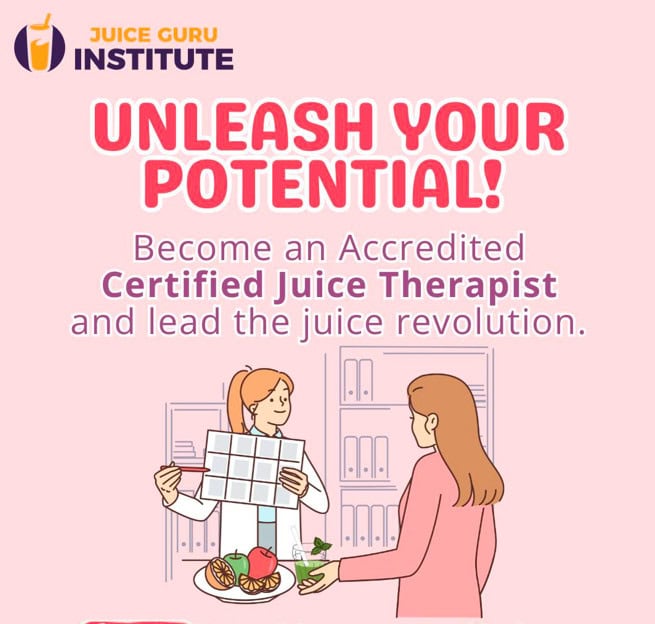
Titles such as ’nutrition therapist,’ ‘hormone expert,’ ‘nutritionist,’ and ‘juice therapist’ are meaningless, but they sound professional, giving a sort of credibility that the layperson may not know is just an illusion.
It’s yet another level when someone has an actual health issue and is looking to find nutrition advice online to help them feel better. The internet has never been kind to the vulnerable and desperate, who are more likely to jump on ‘quick fix’ solutions, cures for the incurable, and the promise of a miraculous outcome from some supplement or another.
The contradictions run deep:
Oatmeal is either healthy or poison because it’s ‘drenched in glyphosate. (wrong)
Alcohol is healthier if it’s ‘natural’ or organic. (wrong)
Seed oils are toxic and basically to motor oil. (wrong again)
The situation gets murkier when professionals we have always thought we can trust for accurate health and nutrition information – RDs, MDs, Nurse Practitioners, for example – are also spreading pseudoscience.
Oh hey, Dr. Gundry.
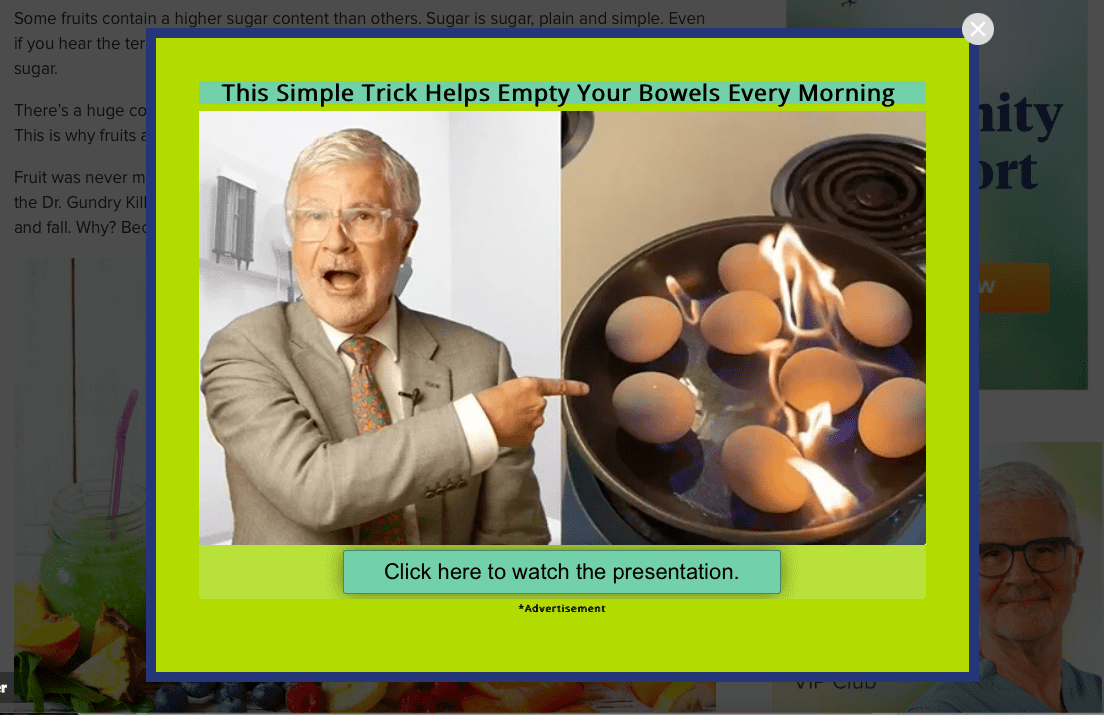
Read my Dr. Gundry review here.
Don’t even get me started on those people who aren’t medical doctors, but still use the word ‘doctor’ to lend themselves legitimacy.
Mindy Pelz is one of them.
Read my Fast Like a Girl review here.
What did the social media study find?
In the study mentioned above, preliminary findings suggested that out of that over 67,000 videos analyzed, only 2.1% of them were accurate when compared to public health and nutrition guidelines. The rest were determined to be inaccurate, partially accurate, or classified as uncertain due to a lack of support by scientific evidence.
Let’s look at that 2.1% stat in a different perspective: If you scroll by 100 posts on social media, only 2 of them will have accurate nutrition information. But how many of those posts will catch your eye? How many of them will you watch, and how many of the captions will you read?
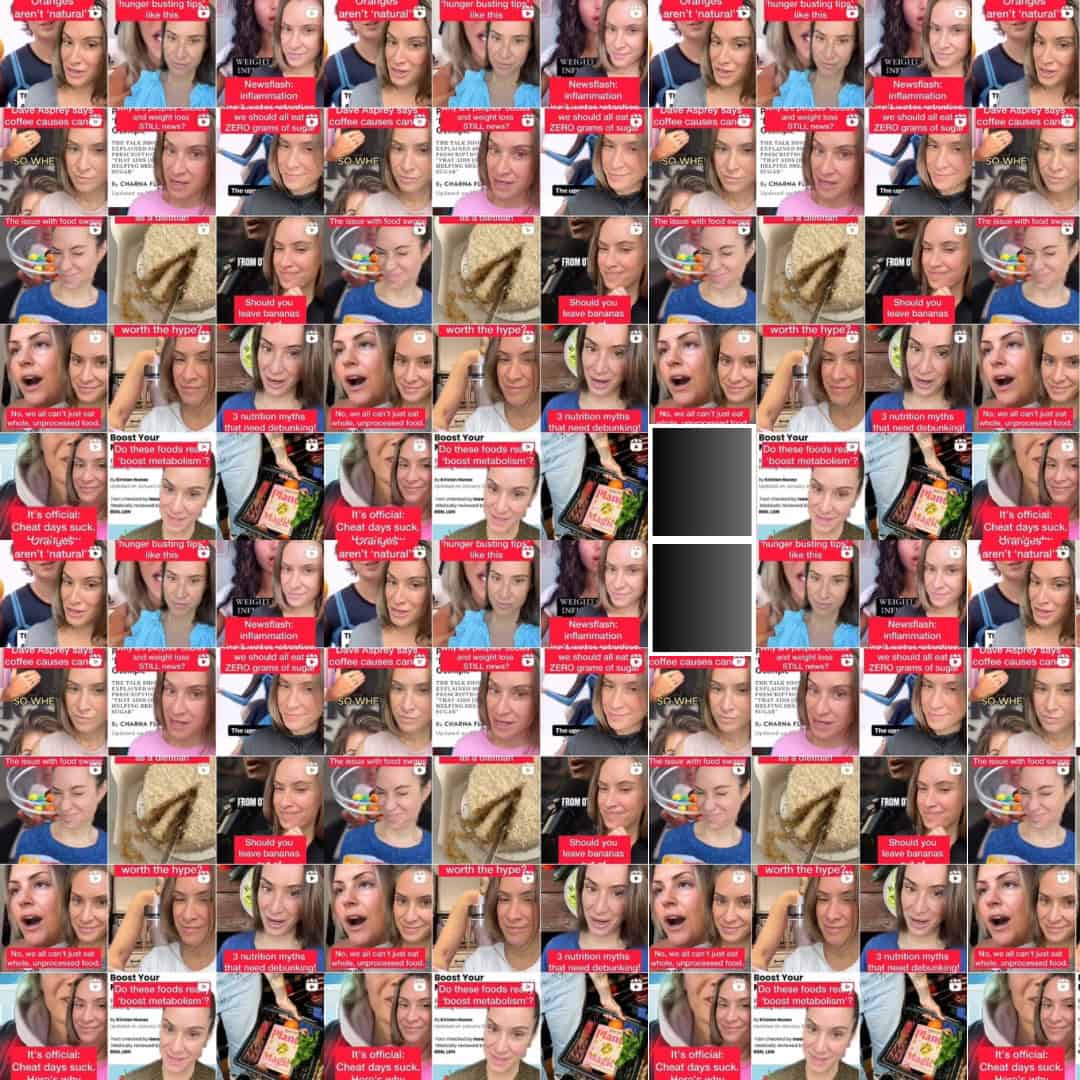
Out of those 100 posts, how many will plant a seed in your mind that will impact your nutrition choices, anxiety levels, or make you question your current habits?
How many of those posts will you believe simply because the poster has a lot of followers, a credential that sounds legit, or an authoritative way of delivering the information?
It’s hard to step back and be critical about social media content because we’re served so much of it at once. It’s like drinking from a fire hose.
Even if something seems ‘off,’ people are still willing to try it. The study surveyed TikTok users, and found that despite the potential risks of some TikTok trends, 30% of participants tried them anyhow, and 31% of those people experienced adverse effects from a ‘fad diet’ trend.
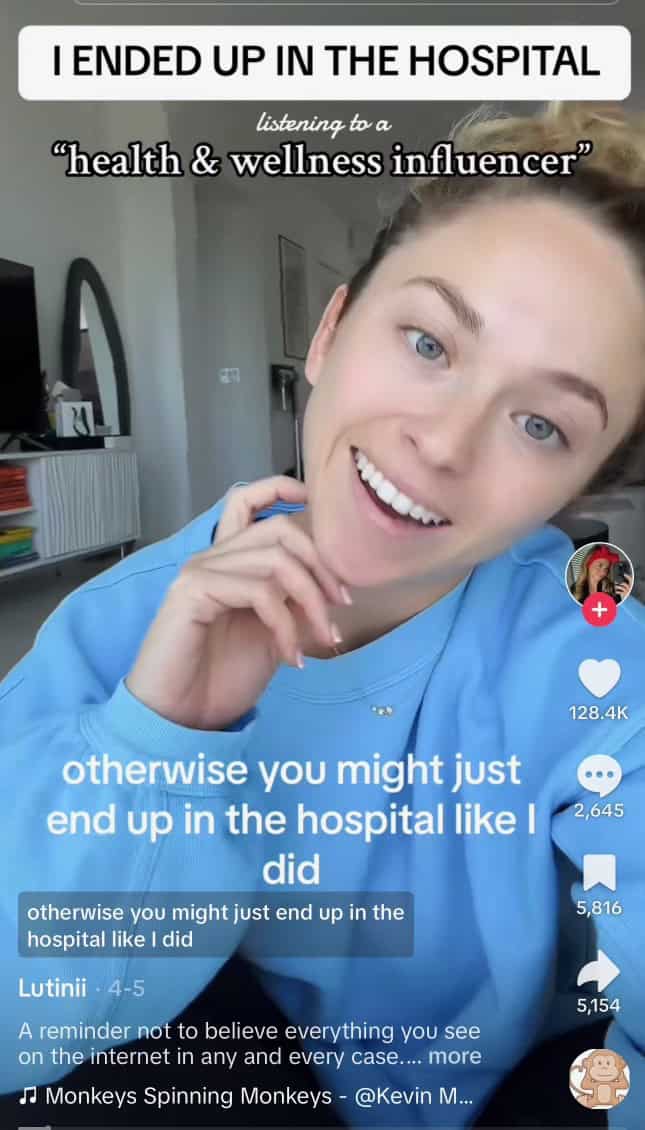
Of those who are influenced by nutrition and health trends on TikTok, 67% report that they adopt at least one of these trends a few times a week.
It’s human nature of want to take the path of least resistance. It’s also in our nature to want to follow the crowd, test boundaries, and to be part of a community. People seem to feel like it’s a flex to engage in a trend that seems ridiculous and potentially has negative consequences. (enter the Tide Pod challenge)
It seems like the allure of possibly going viral is overtaking the peoples’ ethical responsibility to share accurate information. Thousands of views > the actual truth. Why are we entrusting our health to random people?
So, how do we know who’s giving good information and who isn’t?
How to find reliable nutrition information on social media
Go with the scientific consensus.
Use common sense. If the science says that eating more plants is associated with lower disease risk, avoid the contrarian who tells people that chickpeas and other plants are ‘trying to kill us.’
Cross-check the content if you’re unsure about whether it aligns with the consensus.
Also, if something seems too good to be true (aka ‘natural Ozempic’), it probably is.
Reliable nutrition information sources are rarely contrarians who want to buck convention. Sorry to say, most accurate nutrition info isn’t trendy or exciting.
Be suspicious of oversimplification.
Avoid content that suggests that one single food is responsible for all of our health issues, or that one single food can cure them. Allergies and intolerances to any food can exist, but they’re the exception, not the rule.
By the same token, beware of anyone pushing a one-size-fits-all approach to nutrition, aka ‘everyone needs to remove gluten and dairy from their diets.’
Emotion sells.
It’s Marketing 101: make people feel something in order to make a sale. Even if you’re the smartest person on earth, you can still fall prey to a good ‘rags to riches’ (or ‘unhealthy’ to ‘healthy’) story that stirs your emotions. The suggestion of a ‘transformation’ or a cure for something you know is incurable are both predatory techniques that prey on your emotion.
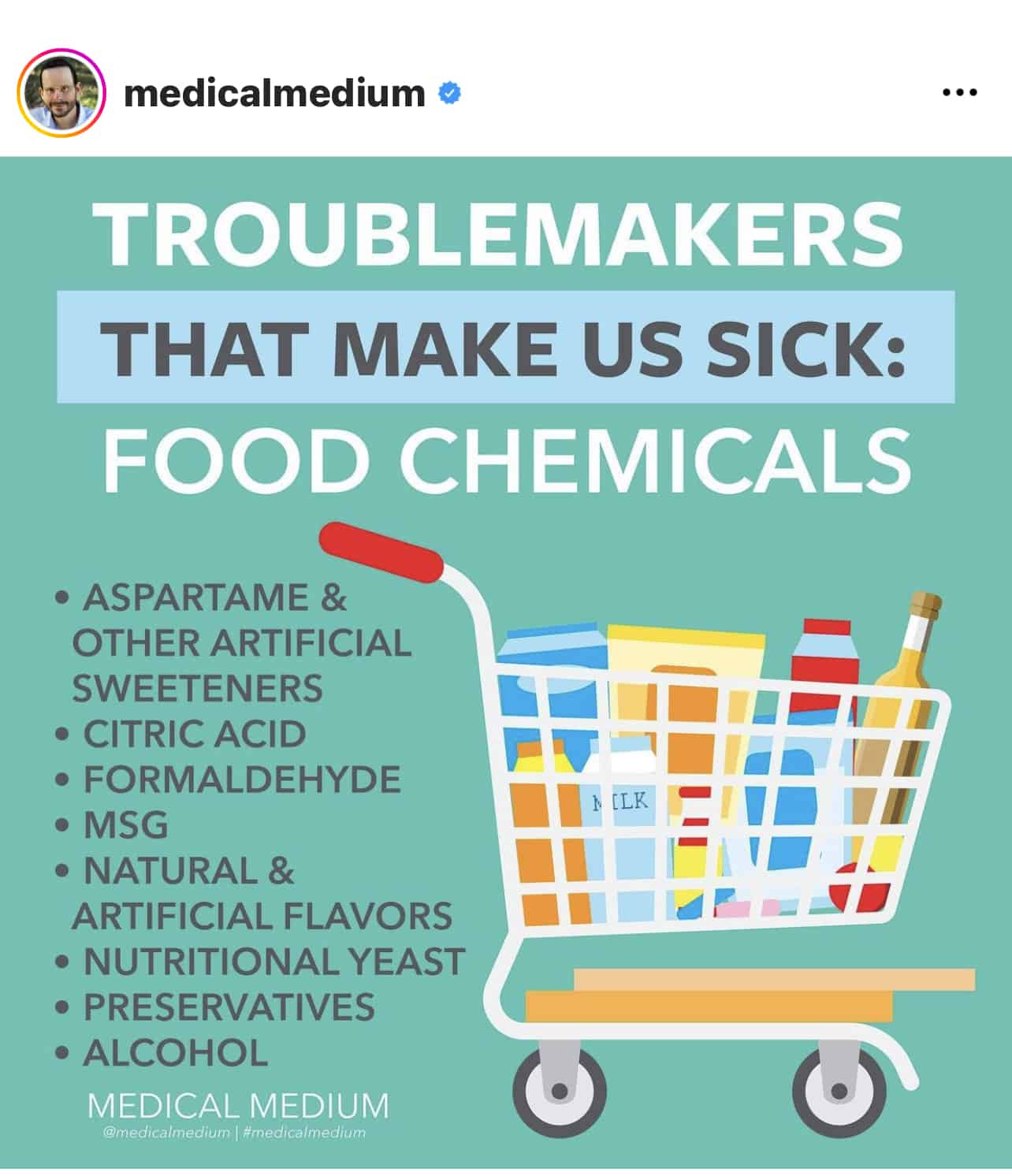
Take a step back a consider when you’re being marketed to in this way.
Red flag words include ‘toxins’; ‘clean’ where it relates to food; ‘cleanse’; ‘chemicals’ (everything is a chemical); ‘natural solution’; ‘fat burning’; ‘appetite control’; ‘transformation’; ‘integrative’ or ‘functional’ medicine.
Here are my issues with some functional medicine practitioners. Read here.
Follow people you know you can trust.
Here are some of my fave reliable sources for nutrition information on Instagram:
The Fitness Chef (Graeme Tomlinson)
Avoid accounts that always seem to be selling something.
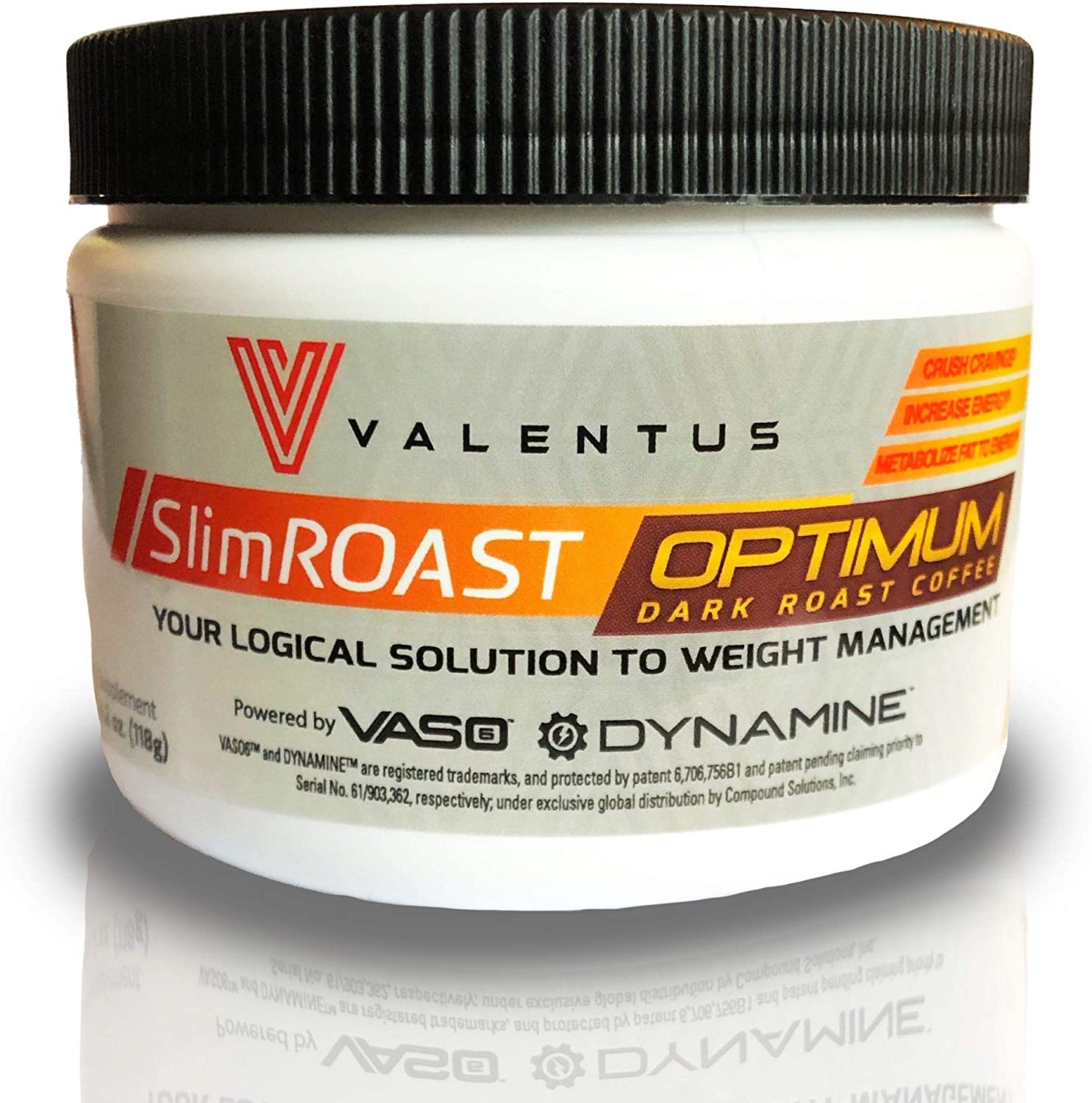
Be suspicious of anyone who is trying to sell you their brand of supplements, a multi-level marketing product, or a diet or meal plan.
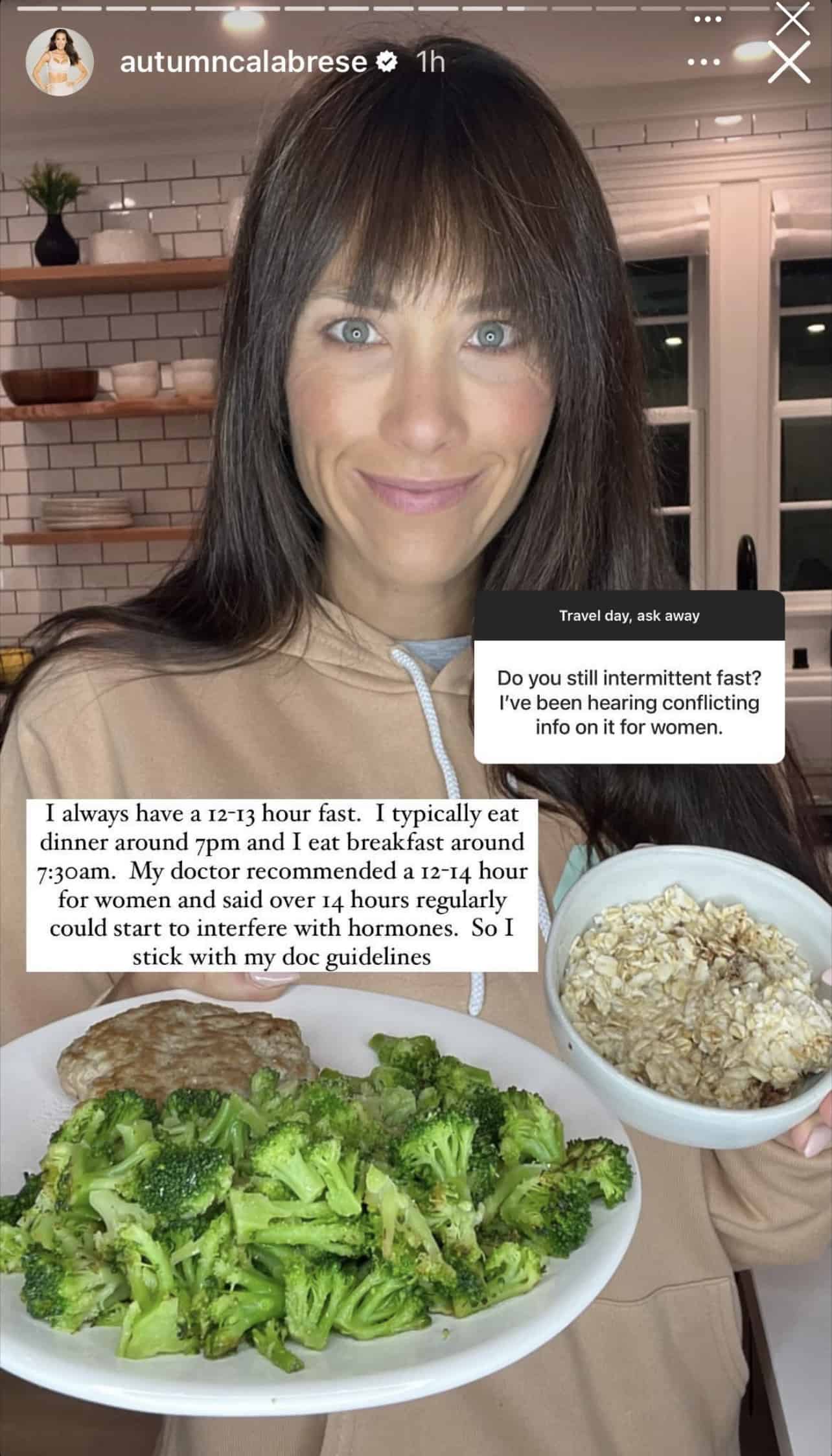
In my opinion, it’s fine to promote products occasionally, but someone’s reputation should be established outside of that. It’s disingenuous when the sale of products is their entire brand.
It’s not all about followers.
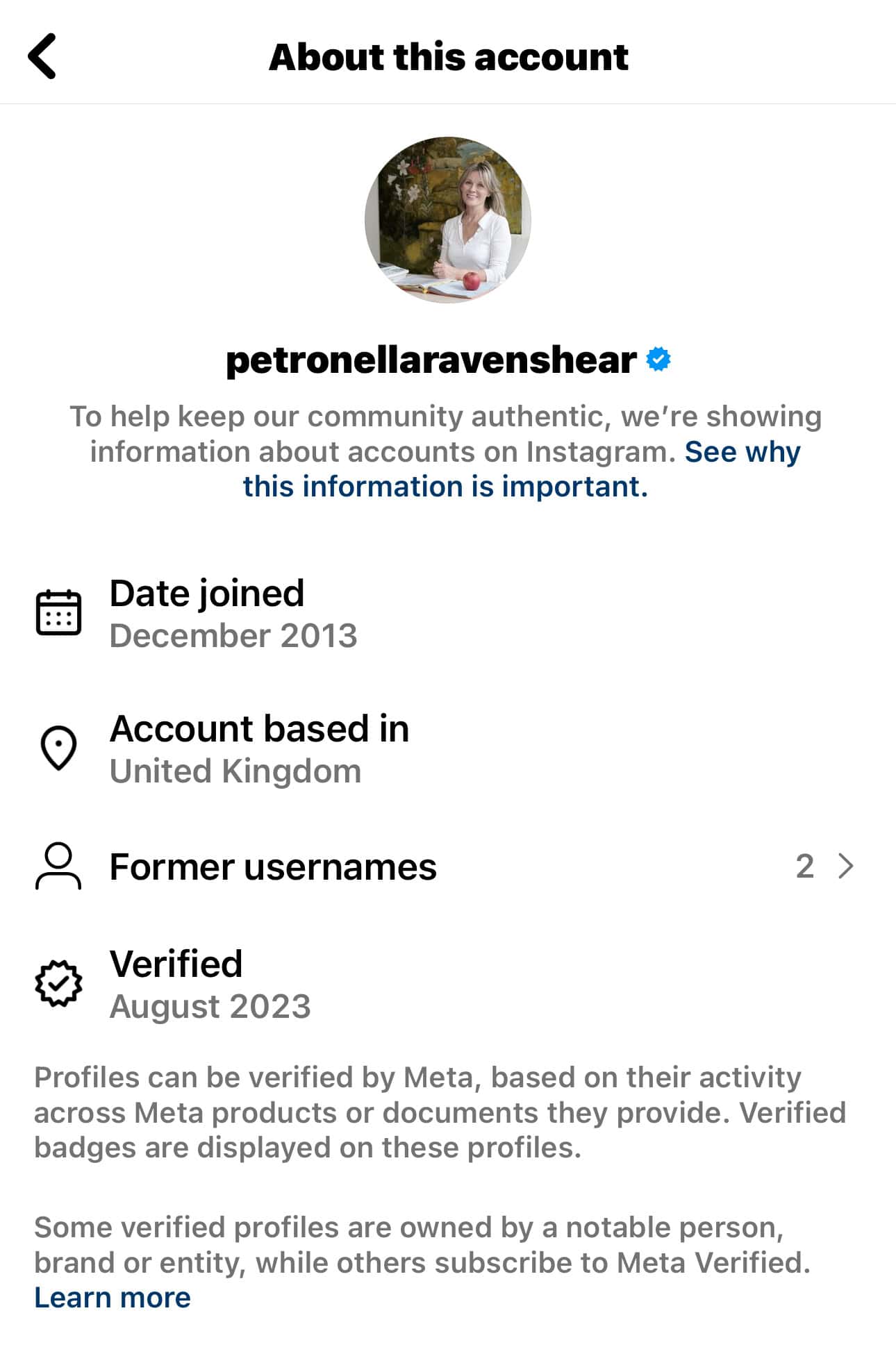
Number of followers is not a good indicator of people who are reliable nutrition sources, and neither is a blue check.
I think since it became possible to buy verification on Instagram, a lot of quack accounts have done it to seem more legitimate.
If you go to ‘About This Account’ on their profile page, you’ll see when the page was verified. If it was after March 2023, and they’ve changed their profile name numerous times, these are red flags.
Food equity is a plus, elitism is not.
Content creators who seem to imply that the only way to be healthy is to invest in expensive food and supplements are off the mark. Mark Hyman is a repeat offender with this.
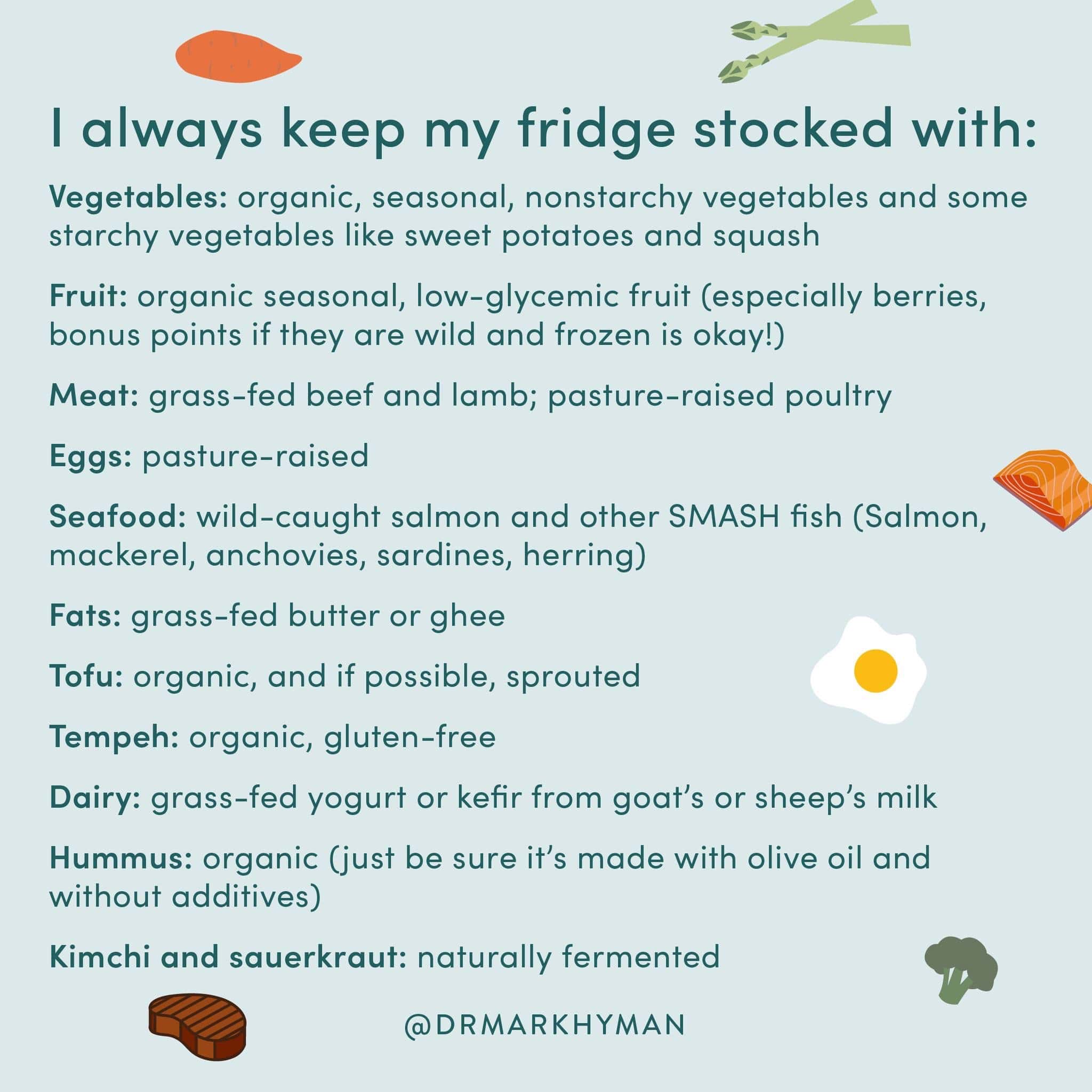
A healthy diet looks different for everyone, but it rarely needs to include more than the basics – beans and legumes, fruits and vegetables (no need to buy organic), a good mix of fats, whole grains, and lean animal proteins/fish if you want.
Also: no foods are off-limits. That, too.
There’s no secret.
A lot of content will market a product as a ‘secret’ or ‘groundbreaking science’ that nobody else knows about.
In reality, if it was that simple, it not only would have been discovered by scientists, it would be regulated by the FDA and used in mainstream medicine.
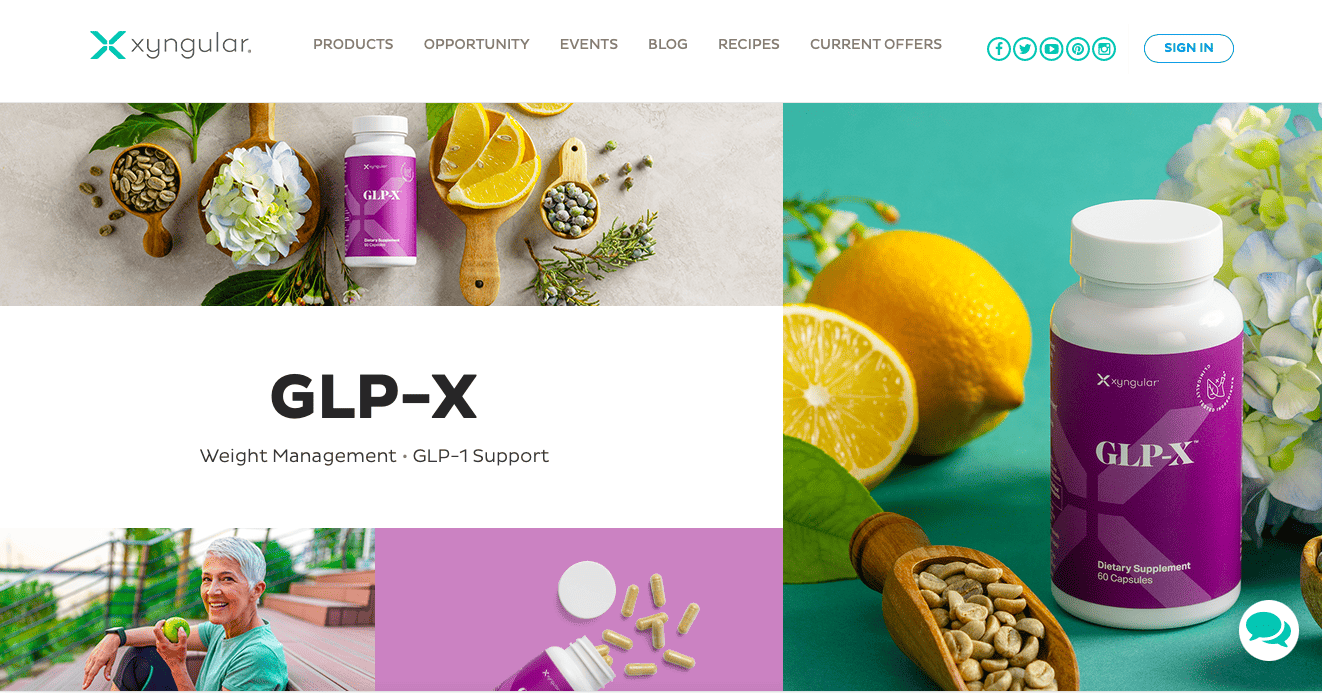
It wouldn’t be sold via MLM or found in your kitchen.
Also: avoid content that uses fear or conspiracy theories (the mention of Big Pharma or Big Food is a huge red flag) to persuade you to change your food choices.
Weight loss and nutrition isn’t ‘effortless.’
Weight is complex, and so are the food choices we make.
It’s easy for content creators to tell us to change our habits, or that their program/supplement is a ‘simple’ solution, but that’s a huge red flag.
Social determinants of health, genetics, culture, trauma, and so many other things play into how and what we eat, what we weigh, and our health as a whole.
When we’re told that something is ‘easy,’ it sets us up for shame when we fail to complete the task (which is why the diet industry exists…diets are meant to fail and keep up coming back).
Work with a registered dietitian if you’re interested in a healthy, individualized approach to weight and/or health that isn’t steeped in shame and misinformation.
I am taking 1:1 clients! Click here for more information and to request a session.