Make Wellness Review: What Are Peptides?
Originally published January 15, 2025. Updated September 2026.
I’ve been asked by many of my followers to do a Make Wellness review. This multi-level marketing company has a whole lot going on:
Expensive supplements!
Overblown claims!
Behind-the-scenes drama!
A regulatory inquiry into earnings claims!
You can’t make this stuff up, so let’s get into what Make Wellness really is.
What is Make Wellness?
Make Wellness, otherwise known as “Make,” is a multilevel marketing company that was founded in 2024 by Justin Prince, a former top distributor for Modere, another MLM whose products I reviewed here.
Prince and Modere sued each other after an acrimonious split. Modere abruptly shut down in April 2025 after 23 years in business. Interesting drama, perhaps, but none of it tells us whether Make’s supplements actually work.
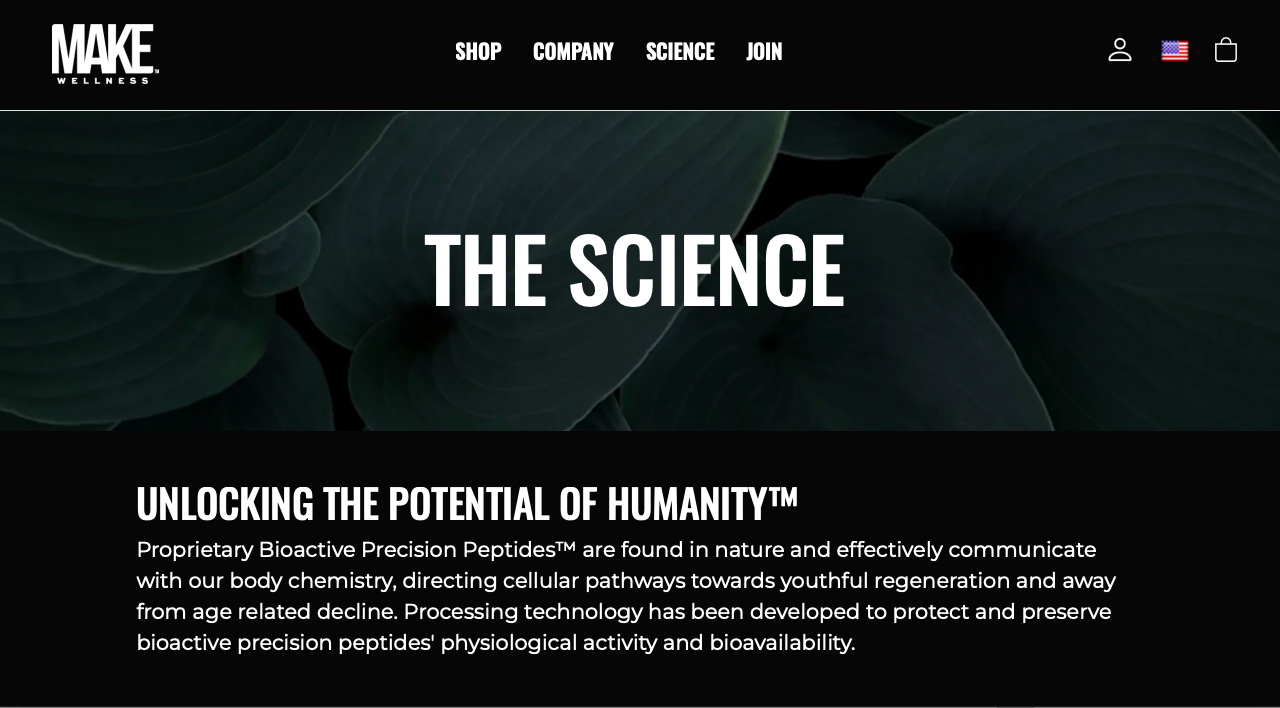
Make’s marketing centres on trademarked “Bioactive Precision Peptides,” which the company says are found in nature and communicate with our body chemistry, directing cellular pathways towards youthful regeneration and away from age-related decline.
That certainly sounds impressive, but my first issue with these claims are that they don’t tell us what measurable difference the products make to a person’s health.
Since my original Make Wellness review was first published, the Make product line has expanded to include FIT, LEAN, HYDRATED, RESTORED, FOCUSED, ENERGIZED and CALM, along with various stacks. Its website also now points to research on some of its branded ingredients.
But don’t fall for the claim that a product has research on it, especially when that research is on separate ingredients and not the finished product. Not all research is good research: we need to ask whether the studies were done in humans, if they used the same ingredients and doses that are in the actual product, if it studied the outcomes being advertised, was independently funded, and if it has been replicated and found benefits that are meaningful in real life, not merely statistically significant.
This is where Make’s marketing continues to run far ahead of the evidence.
What are peptides?
Peptides are short chains of amino acids, which are the building blocks of protein. Proteins are generally longer and more structurally complex. During digestion, enzymes break dietary proteins into smaller peptides and individual amino acids, which can be absorbed and used by the body.
Our bodies also make peptides that have important functions. Insulin is a peptide hormone involved in blood glucose regulation. Oxytocin is another peptide hormone, with roles in reproduction, labour, delivery and lactation.
Peptides occur naturally in protein-containing foods. Some food-derived peptides may have biological activity, and researchers are studying their possible effects on blood pressure, glucose metabolism, and inflammation among others. Much of this research is still preclinical, though. So, remember that an effect that’s observed only in cells or in animals is not proof whatsoever that the same effect will be present in humans.
Peptides can be isolated or manufactured for use in foods, supplements and medications. Collagen peptides, for example, are tremendously popular.
It’s important to not confuse food-derived peptide supplements such as Make’s with injectable peptide drugs or the unapproved injectable substances sold online.
Make says its Bioactive Precision Peptides are derived from natural sources, identified using artificial intelligence, and designed to influence cellular signalling. The company deserves credit for getting in early on the peptide craze, but “AI-discovered,” “bioactive,” “precision” and “cell signalling” are not clinical outcomes.
They don’t tell us how much stronger someone will become, how much weight they will lose, how much better they will feel, or whether the product works better than a less expensive alternative.
Plant-derived peptides versus approved peptide medications
This is where the language around peptides can become extremely misleading.
Make’s plant-derived peptides involve chains of amino acids, similar to FDA-approved peptide medications—such as insulin and the GLP-1 medication semaglutide. But this does not make them interchangeable. It’s a bit like saying a paper airplane and a Boeing 787 are basically the same because they both have wings.
| Plant-derived peptides in supplements | FDA-approved peptide medications | |
|---|---|---|
| What they are | Usually mixtures of fragments produced by breaking down a plant protein, such as fava bean protein | Specific molecules with a precisely defined amino-acid sequence and structure |
| How they are taken | Usually swallowed as a powder, capsule or drink | Often injected because many peptide drugs would otherwise be broken down during digestion; a few are specially formulated for other routes |
| What happens in the body | Many are further digested into smaller peptides and amino acids; whether enough intact active peptide reaches its target is product- and peptide-specific | Designed and tested to reach a particular biological target at a known dose and produce a predictable pharmacological effect |
| Evidence required | A supplement can generally be sold without trials proving that the finished product is effective | Must undergo clinical testing for safety, effectiveness, dosing and manufacturing quality before approval |
| Manufacturing | A hydrolysate may contain a mixture of many peptide fragments, and proprietary blends can obscure exact amounts | Identity, purity, strength and consistency are tightly controlled; each dose must meet drug-manufacturing standards |
| Claims | May use qualified structure/function language such as “supports recovery” | Approved to treat specific diseases or conditions according to the product label |
| Expected effect | May have no effect or a modest one; this must be established for the specific ingredient, dose and outcome | Demonstrated clinical benefit for an approved indication, with known risks and limitations |
There’s another distinction worth making: “plant-derived” describes the source, not the strength of the evidence. A peptide isn’t better or clinically effective because it came from a plant, and a medication is not inferior or “unnatural” because it was synthesized in a laboratory.
Approved peptide medications aren’t just random peptides in a syringe (we aren’t talking about the recently approved peptides that have little to no human trials). Semaglutide, for example, is a specific GLP-1 receptor agonist engineered to remain active in the body much longer than our naturally occurring GLP-1. Its dose, pharmacology, benefits, risks and manufacturing are extensively studied and regulated.
By contrast, the fava bean hydrolysate in FIT is an orally consumed mixture of food-derived peptides. It may have some biological activity, but it has not been shown to act like a prescription peptide drug, and like other supplements, Make’s products have not gone through the FDA drug-approval process.
This doesn’t mean every plant peptide is useless or every approved drug is appropriate for everyone. It means the word “peptide” alone tells us almost nothing about whether a product works. The exact molecule or mixture, dose, route, bioavailability, clinical evidence and intended use all matter.
Supplements are regulated—but not like drugs
Dietary supplements are regulated in the United States, but not the same way prescription drugs are. The FDA does not approve most supplements for safety or effectiveness before they are sold. The onus is on manufacturers to ensure that their products are safe, properly labelled and not misleading, the FDA doesn’t usually get involved unless there’s an adverse event involving a product.
In other words, the world of supplements is like the Wild West, and it’s a real case of “buyer beware.”
Supplement marketing can legally use claims such as “supports metabolism” or “supports recovery,” provided they have substantiation and include the familiar disclaimer that the claim has not been evaluated by the FDA and the product is not intended to diagnose, treat, cure or prevent disease. This is a loophole that many, many companies – in particular MLMs like Make – exploit to their advantage.
Make Wellness FIT
Make Wellness FIT currently sells for around $130 USD for 30 servings. That is outrageous.
It contains a fava bean protein hydrolysate sold under the branded name PeptiStrong, along with vitamins, minerals and caffeine. Make markets FIT for muscle recovery, healthy aging, strength, endurance and fatigue, as long as it’s combined with adequate protein, sleep and a resistance-training program.
If you don’t combine it with those things, it may not “work.”
PeptiStrong has some human research behind it: a small 2023 randomized trial in 30 healthy men found that a fava bean hydrolysate improved recovery of muscle strength and reduced fatigue after a muscle-damaging exercise protocol. A later eight-week randomized trial paired 2.4 grams per day of the ingredient with resistance training and reported improvements in some measures of strength and muscular endurance compared with placebo.
That’s more evidence than “none,” but it’s still preliminary. Both studies were small and short, and they had connections to the ingredient manufacturer, which may be considered to be a conflict of interest. The studies evaluated a particular branded ingredient under controlled conditions; not every claim made by Make affiliates or the complete FIT product as sold.
There’s also no reasonable path from “this ingredient produced improvements in a small trial” to “these peptides direct the body towards youthful regeneration.” Those are two very different claims.
FIT also contains roughly a cup of coffee’s worth of caffeine. If someone feels more energetic after taking it, the caffeine is an extremely obvious possible explanation.
Resistance training, enough dietary protein and energy, and adequate sleep remain the foundations of building and maintaining muscle. A supplement may potentially add an incremental benefit, but it doesn’t replace those behaviours. At around $130 a month, consumers deserve to know how large that incremental benefit is—not just be shown impressive-looking percentages stripped of context.
Because no supplement will replace the nutrition basics.
Make Wellness LEAN
LEAN currently sells for around $100 USD for 30 servings. It is marketed to reduce cravings and support metabolic health and body composition.
Its featured ingredient is a Saccharomyces cerevisiae, which is a type of yeast. A 2025 systematic review and meta-analysis pooled the available randomized controlled trials on Saccharomyces cerevisiae-derived bioactive hydrolysates, and found modest reductions in weight and some measures of adiposity over approximately 10 to 12 weeks.
That sounds more convincing until you look closely. The review included just six trials and 262 participants, with substantial inconsistency among the studies for several outcomes. The evidence is short-term, applies only to particular yeast hydrolysates, and does not establish that the finished LEAN product produces durable, clinically important weight loss in the real world.
This is also nowhere near comparable to the evidence base or average effect of approved obesity medications. Losing a couple of kilograms in a short trial does not make something a “natural Ozempic” or a metabolic breakthrough.
I also have a problem with marketing normal hunger as a bodily malfunction that needs to be silenced. Hunger is a biological signal, not a character flaw. Appetite regulation can be difficult, and some people benefit from evidence-based obesity treatment, but a $100 supplement sold around “cravings” can reinforce the idea that wanting food is a personal failure.
Food is still the best appetite suppressant of them all.
If you’re always hungry, possible contributors include:
- Not eating often enough
- Meals that are low in protein, fibre, fat or overall energy
- Restricting too aggressively earlier in the day
- Inadequate sleep
- Certain medications or health conditions
- A rigid mindset focused on being “good” with food
If you have weight-loss goals, focus first on sustainable basics: balanced meals, adequate protein and fibre, regular eating, movement you can maintain, sleep, and support for your relationship with food. Depending on your health and goals, speak with a qualified healthcare professional about treatments that have meaningful evidence behind them.
Make Wellness HYDRATED
HYDRATED currently sells for around $55 USD for 30 servings. It contains electrolytes, coconut water powder, glycine and the trademarked SolarSea Sport mineral complex.
There is nothing inherently wrong with an electrolyte drink. These products can be useful during prolonged or intense exercise, in hot conditions, with heavy sweating, or when fluid and food intake are limited. But for the majority of people who aren’t experiencing the above, electrolyte supplements aren’t necessary and can contain massive amounts of sodium.
Make markets FIT and HYDRATED as a “support stack” for people taking or coming off GLP-1 medications. This is clever positioning, but people using GLP-1 medications do not automatically need a proprietary peptide-and-electrolyte stack.
Some people taking these medications may need support to meet their fluid, protein and energy needs because of gastrointestinal side effects or a markedly reduced appetite, but those needs should be assessed individually. A supplement bundle is not a substitute for medical follow-up or personalized nutrition care, and it’s definitely not necessary for every single person who is on a GLP-1 med.
For most people doing ordinary daily activity or a typical workout, water plus regular meals and snacks will replace fluid and electrolytes adequately. Coffee, tea, milk, soup and water-rich foods all contribute to hydration, too.
No magic here, people.
What are people saying about Make Wellness on social media?
Like other MLMs, Make relies on affiliates to sell products and build teams. This creates an obvious tension: the person telling you that a supplement changed their life may also earn money when you buy it or join their organization.
That doesn’t automatically make every testimonial false, but it does mean that the financial incentive should be clearly disclosed (this is the law) and that claims should be scrutinized. Anecdotal evidence isn’t science, no matter how many before-and-afters or positive reviews a product has.
In 2025, the Direct Selling Self-Regulatory Council, administered by BBB National Programs, opened an inquiry into seven earnings claims made by Make and its affiliates. These included claims about “life-changing income,” “financial freedom,” retiring from a nine-to-five job, and a post suggesting that 386 people earning at least $500 in one month amounted to a $6,000 annual raise.
Make did not try to substantiate the claims. Instead, it removed or modified them, contacted the affiliates involved, and said it was developing stronger compliance monitoring and training. The DSSRC administratively closed the inquiry after the company took corrective action.
This shows why testimonials about income, lifestyle, and health should never be accepted at face value.
The original version of this review described a Make affiliate claiming that the products helped a child’s cerebral palsy more than medical treatment. This type of content is misleading, inappropriate and potentially dangerous.
Please do not stop or avoid medical treatment because of a supplement testimonial.
Make Wellness review, in short
Some of Make’s branded ingredients now have preliminary human evidence behind them, but small, short, often industry-connected ingredient trials do not justify sweeping claims about metabolism, cellular signalling, “youthful regeneration,” focus, energy, inflammation or whole-body transformation. These are just buzzwords aimed to hook customers who don’t know any better.
Make’s central sales strategy is familiar: take an ingredient with early or modest evidence, wrap it in impressive scientific language, put it in an expensive proprietary formula, and let financially motivated affiliates tell the rest of the story.
I would not recommend these products as a first-line approach to muscle recovery, weight management, hydration or general health. They’re expensive, and the marketing repeatedly stretches beyond what the evidence can tell us. Actually, I wouldn’t recommend them at all for anything; I’m positive that there are less expensive versions to be had, and your money is better spent on not feeding the predatory MLM machine that monetizes trust, relationships and hope, particularly among women. I wrote more about that here.
Focus on a common-sense approach to health and nutrition. Eat balanced meals and a variety of foods you enjoy. Get enough protein, fibre and overall energy. Exercise regularly. Get adequate sleep. Treat medical conditions with qualified professionals. And don’t assume that “clinically researched” means “clinically proven to do everything on the sales page.”
The wellness industry is not operating outside capitalism just because it uses words such as “natural,” “holistic” and “bioactive.” The people warning you about Big Pharma are ignoring the fact that the wellness industry is worth several times what the pharmaceutical industry is. These people want to make money from your fear, only with far less evidence behind what they’re selling.